To give away children's things, start with items another family can use, choose a local sharing service or a charity that accepts them, and describe their condition clearly. Arrange the handover before packing everything by the front door. Clothes, complete games and readable books each need slightly different preparation.
You do not have to clear the whole house at once. One useful item reaching its next family is a finished job. This guide helps you choose where it should go and what to do before you offer it.
Where can you give away children's items?
There are several routes, depending on whether you want to arrange an exchange yourself or give items to an organisation.
- A family sharing app: list an item for another household to collect. YoungPlanet's community marketplace lets families give and receive children's items for free. See how YoungPlanet works for the distinction between the free marketplace and optional membership.
- Friends and local parent groups: ask whether someone needs the specific size, book series or toy you have. A clear offer is easier to respond to than an unspecified bag of things.
- A baby bank: check the organisation's current needs, accepted ages and drop-off arrangements before travelling. The Baby Bank Alliance map can help you find local organisations.
- A charity shop or community organisation: contact the branch first. Storage space and donation policies differ, so an item being useful does not mean every organisation can take it today.
- A swap: exchange books or other suitable items with families you know. Our children's book swap guide explains a small event you can organise without a complicated system.
Choose the route you can realistically finish. If arranging individual collections feels too much, an organisation accepting your particular items may suit you better. If you have one unusual item, a detailed listing lets someone looking for it find the right match.
Decide what is ready for another home
Pick a small area, such as the hallway basket or one wardrobe shelf. Sort its contents into things you still use, things you are keeping for a clear reason and things you are ready to offer.
Look at each item from the next family's point of view. Are the pieces present? Can you identify the model or size? Is there damage that affects how it works? Check the GOV.UK product recall database and follow any applicable recall instructions before offering a product.
Do not treat a free listing as a way to pass on something unsafe. If you cannot establish what an item is or whether it is suitable to use, resolve that before giving it away. For equipment such as car seats or sleeping products, seek product-specific guidance rather than relying on a general decluttering checklist.
Set aside damaged items separately. A bag intended for another family should not quietly become the place where you put everything you could not decide about.
Prepare clothes, toys and books differently
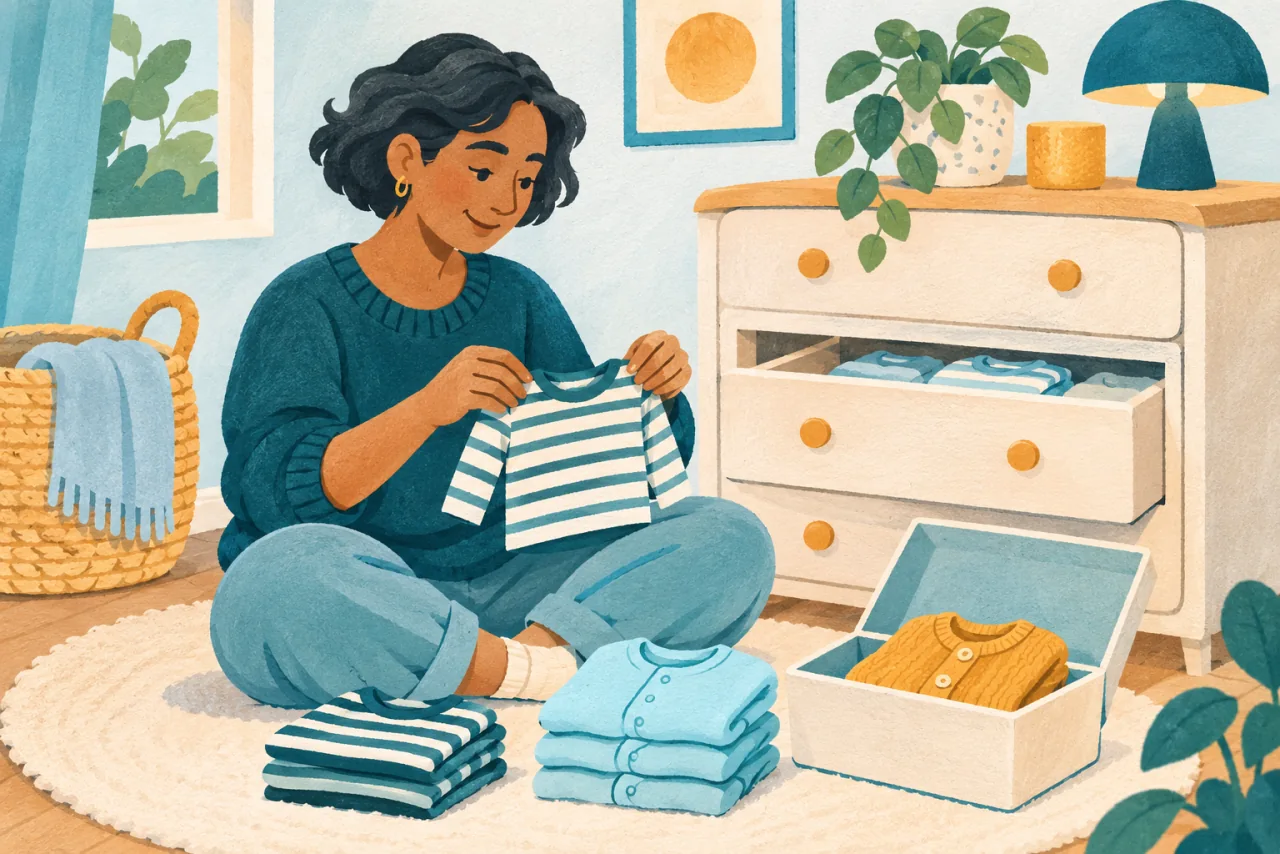
For clothing, read the labels and group similar sizes together. State what is included and mention noticeable marks, repairs or missing fastenings. The outgrown clothes checklist explains how to build a useful bundle.
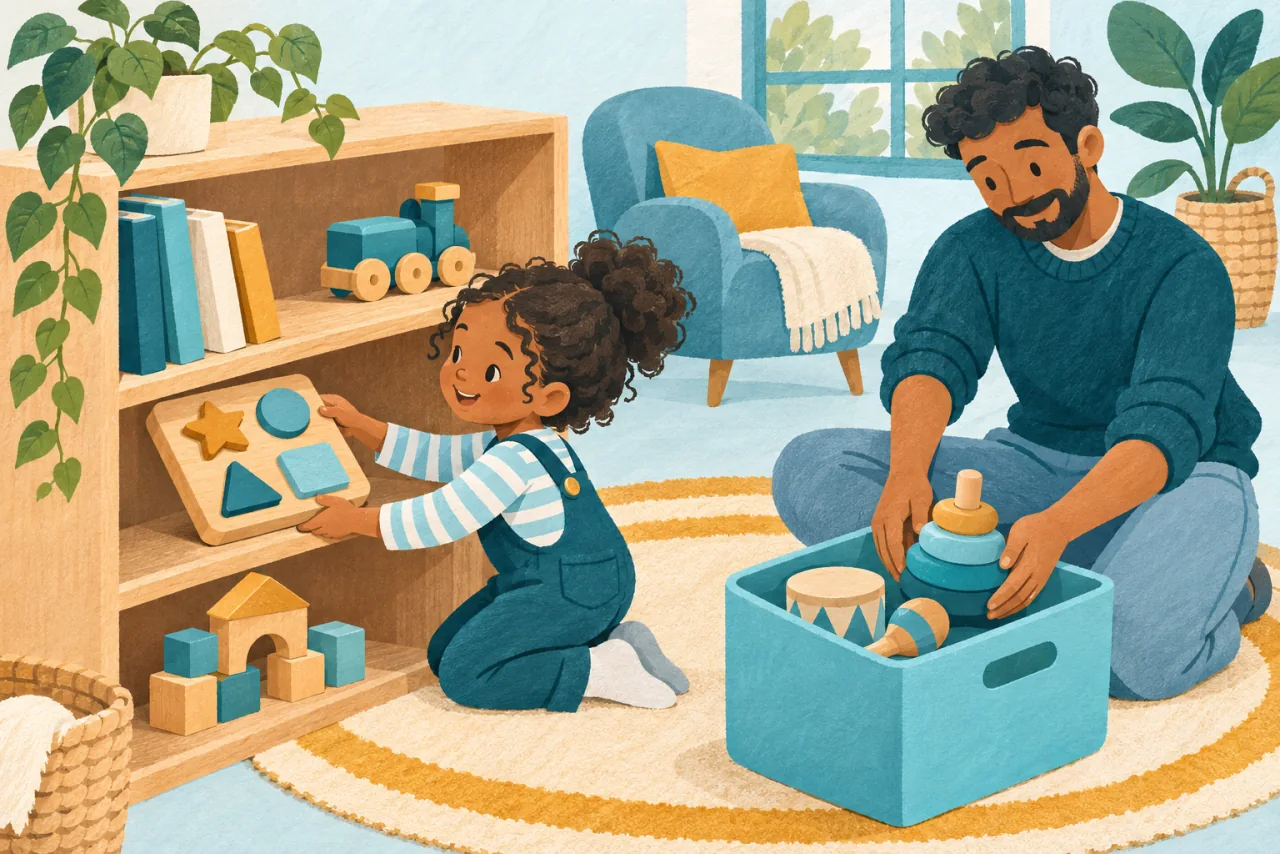
For toys and games, bring the accessories together and check the contents against any available list. Describe a missing piece precisely. A puzzle with an unknown piece count needs a different description from a puzzle you have completed and counted.
For books, check the binding and pages. Mention writing, tears or missing flaps. Keep library books and anything borrowed out of the giveaway pile until it has been returned to its owner.
Clean items according to their care instructions and let them dry before packing. Avoid adding a strong fragrance to make something seem fresher; an honest description is more helpful.
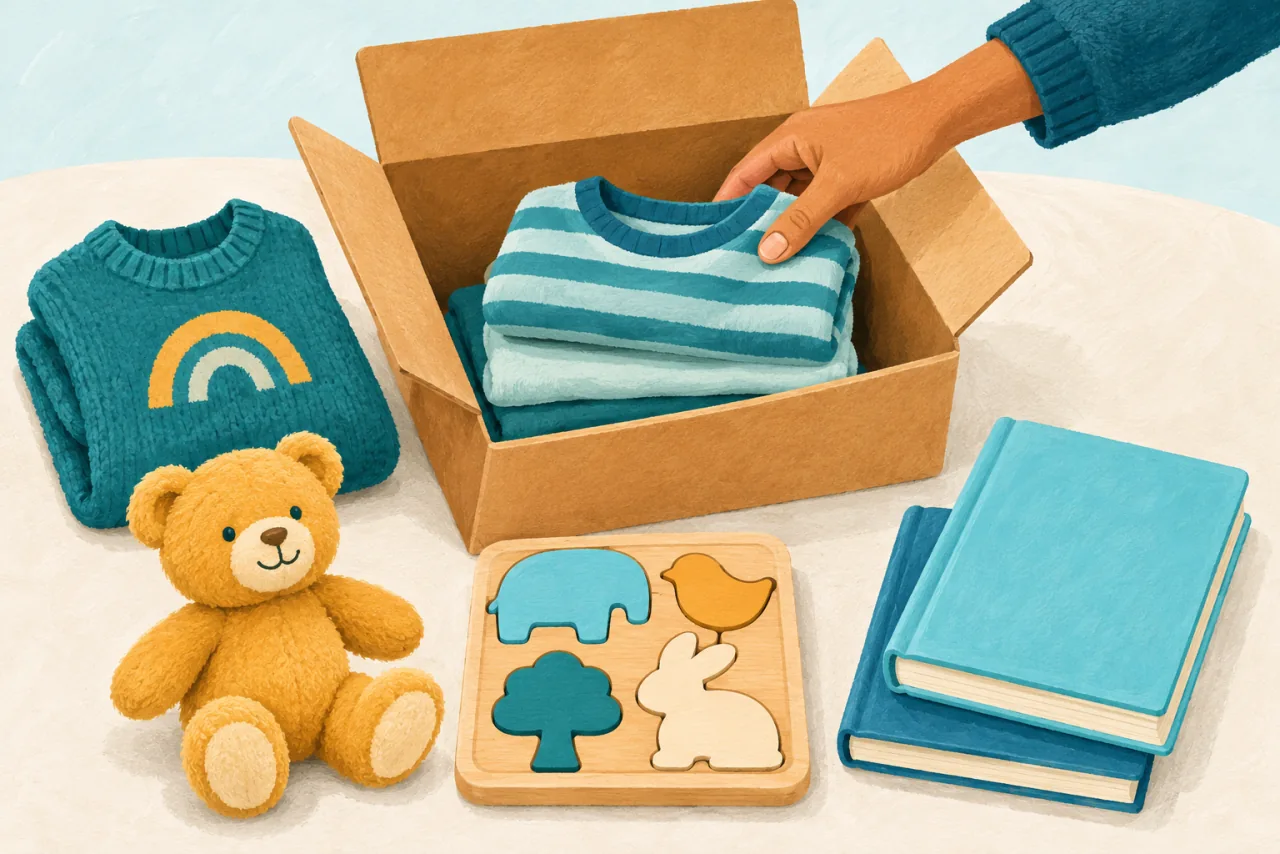
Write an offer that answers the obvious questions
A useful title names the item, size or edition. "Children's winter coat, size 4-5 years" tells a reader more than "Lovely coat".
Include a photo of the whole item and close-ups of details that matter. Use your own photographs of its current condition. For a bundle, show the contents laid out so the recipient can see what is actually included.
A short description can cover:
- What the item is and what comes with it.
- The labelled size, measurements or model.
- Its current condition, including any defects.
- Whether it is a single item or a bundle.
- A general collection area and the arrangements you can offer.
Our second-hand toy listing guide includes a worked example. Adapt the structure to your item rather than copying claims that do not apply.
Agree a collection you can both manage
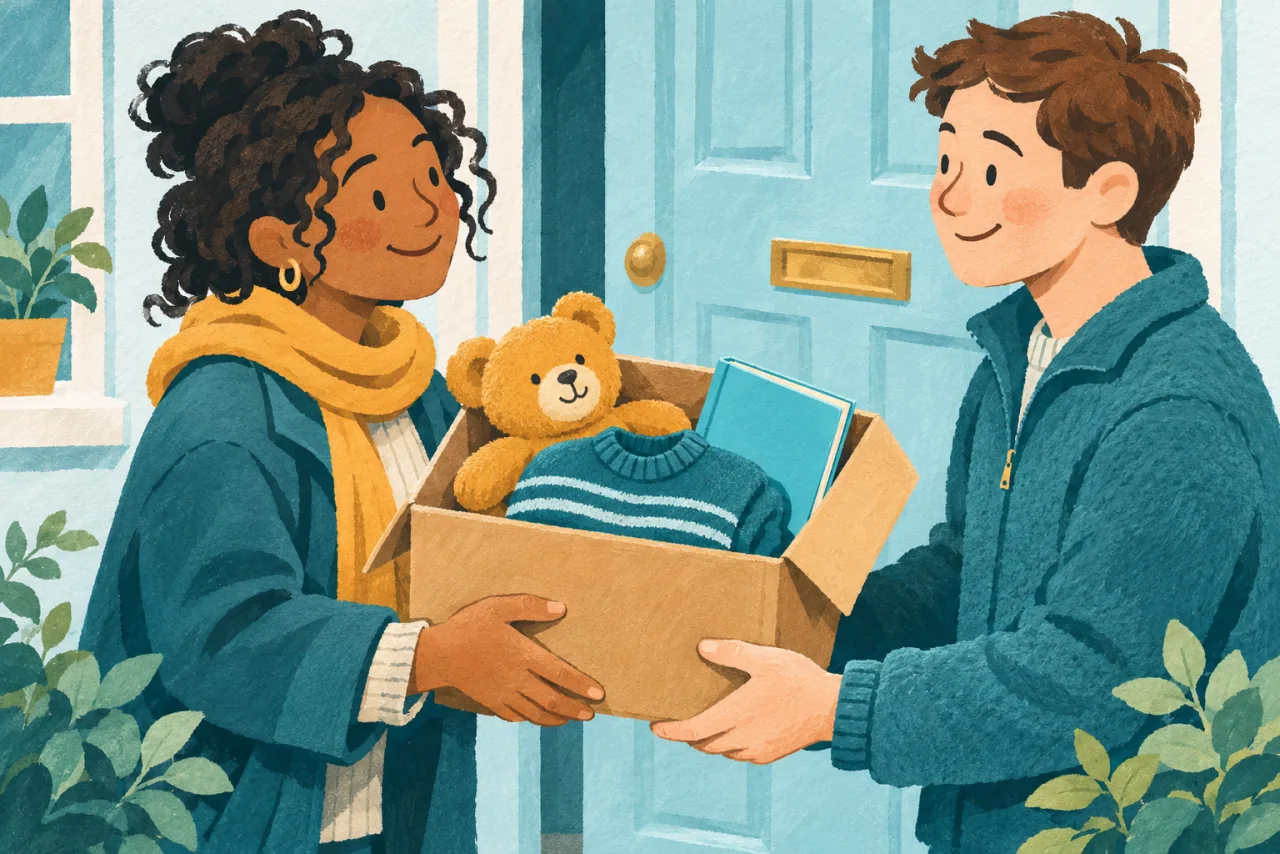
Confirm the item and collection details in your conversation before anyone sets off. Share precise collection information privately rather than including it in a public description. Choose an arrangement you feel comfortable with and follow the platform's guidance.
Pack bundles together, label them and keep them separate if you have several collections planned. A quick final message can prevent a wasted trip when plans change. If an exchange falls through, update the listing so its availability stays clear.
Make sure bulky items can be moved as agreed. Do not assume the person collecting has a car, extra help or room for an additional box you have not discussed.
What if something cannot be passed on?
Separate reusable items from things that need another disposal route. Recycle Now's item directory can help you check the right route for the material and your location. Local arrangements vary; an item being made of plastic does not automatically make it suitable for household recycling.
Keep the next step specific: list the complete game, ask a charity about the books or check a textile recycling point for worn clothing. A named destination is more useful than another bag labelled "sort later".
When you are ready to start, explore the YoungPlanet community and choose one thing your family has finished with.
Compare free sharing routes
YoungPlanet publishes this comparison. These are different ways to give and find items, not a claim that one service suits every family. Service information checked 10 November 2026; check each service's current rules.
Scroll the table sideways on a small screen to compare all columns.
| Route | Useful starting point | What to confirm |
|---|---|---|
| YoungPlanet | A parent-focused marketplace for free children's things | Current item details and handover; optional membership is separate |
| Olio | A wider local sharing community for food and other items | Current listing rules and local availability |
| Freecycle | Local groups for giving and getting usable things | The group's current rules and offer details |
| Freegle | Local free giving and getting | Your local group's arrangements and current offers |
| Baby bank or charity | An organisation accepting particular essentials or donations | Acceptance, referral or eligibility and drop-off arrangements |
For YoungPlanet's current offers, start with free clothes or toys and games. For a practical reminder, download our handover checklist.
← Back to the blog