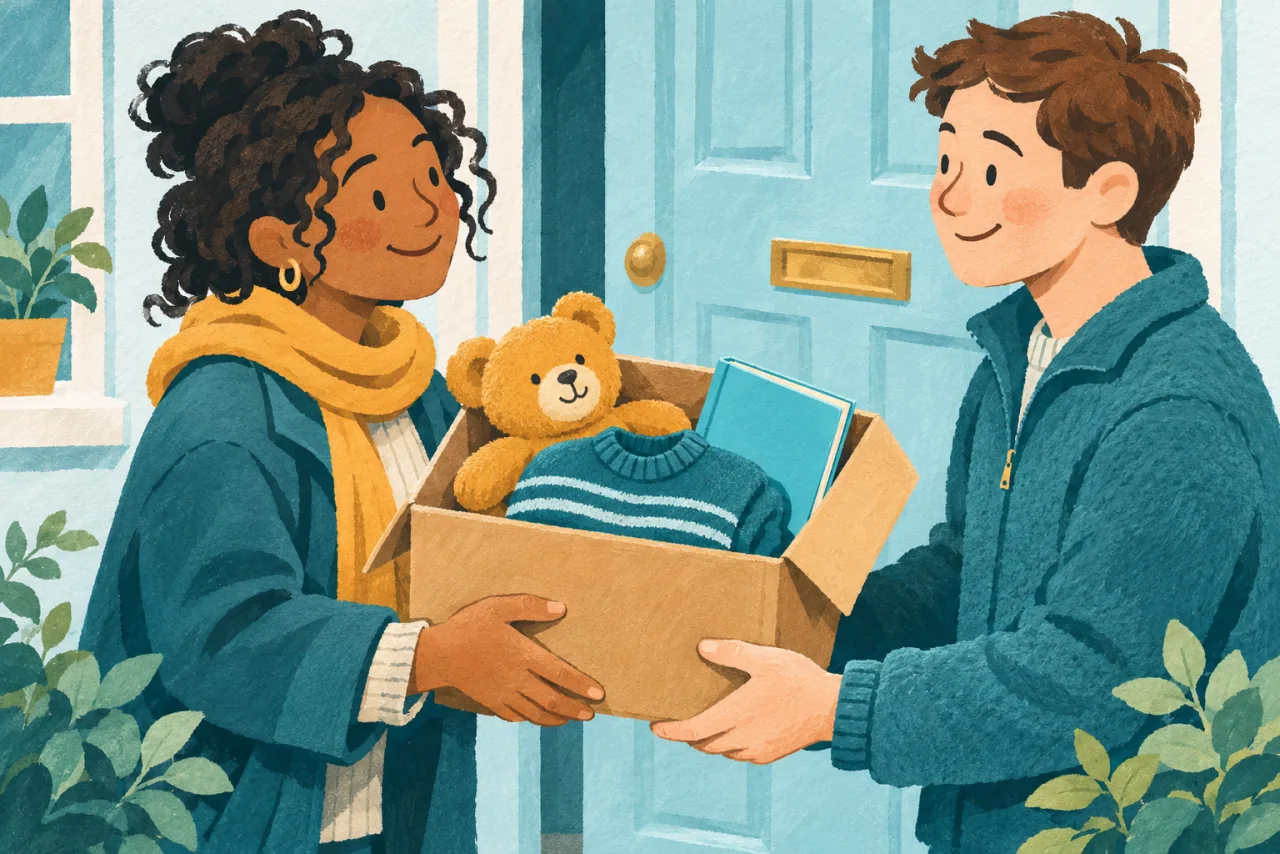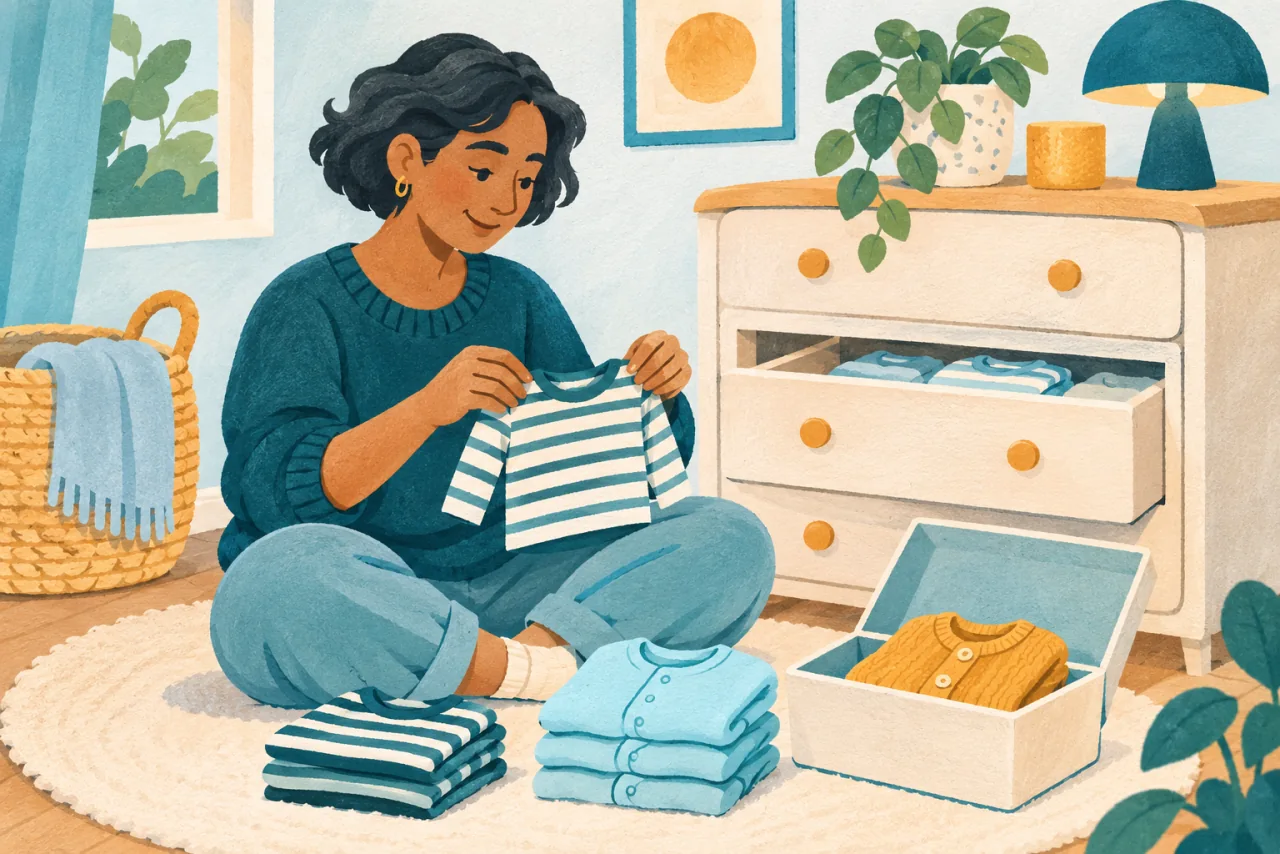

A low-waste children's birthday party starts with the things you already have, the things you can borrow and a plan for what happens afterwards. Reusable tableware, decorations you can bring out again and a smaller number of well-chosen extras are practical places to begin. You can make a few changes without turning the celebration into a project about perfect choices.
Choose the parts that fit your budget, time and venue. A plan that leaves you with another cupboard of unused purchases has not solved the storage problem.
Start with the party you are actually hosting
Write down the guest count, location, duration and activities before making a shopping list. Check what the venue provides and what it expects you to bring.
Ask about tableware, decorations, washing-up facilities and waste arrangements. A venue may already have items that would otherwise appear on your list. It may also have rules about what can be attached to walls or left behind.
Keep a separate list of what you own, what you can borrow and what you still need. This prevents borrowing a set of cups and then buying another pack because the arrangements were never confirmed.
Borrow tableware with a return plan
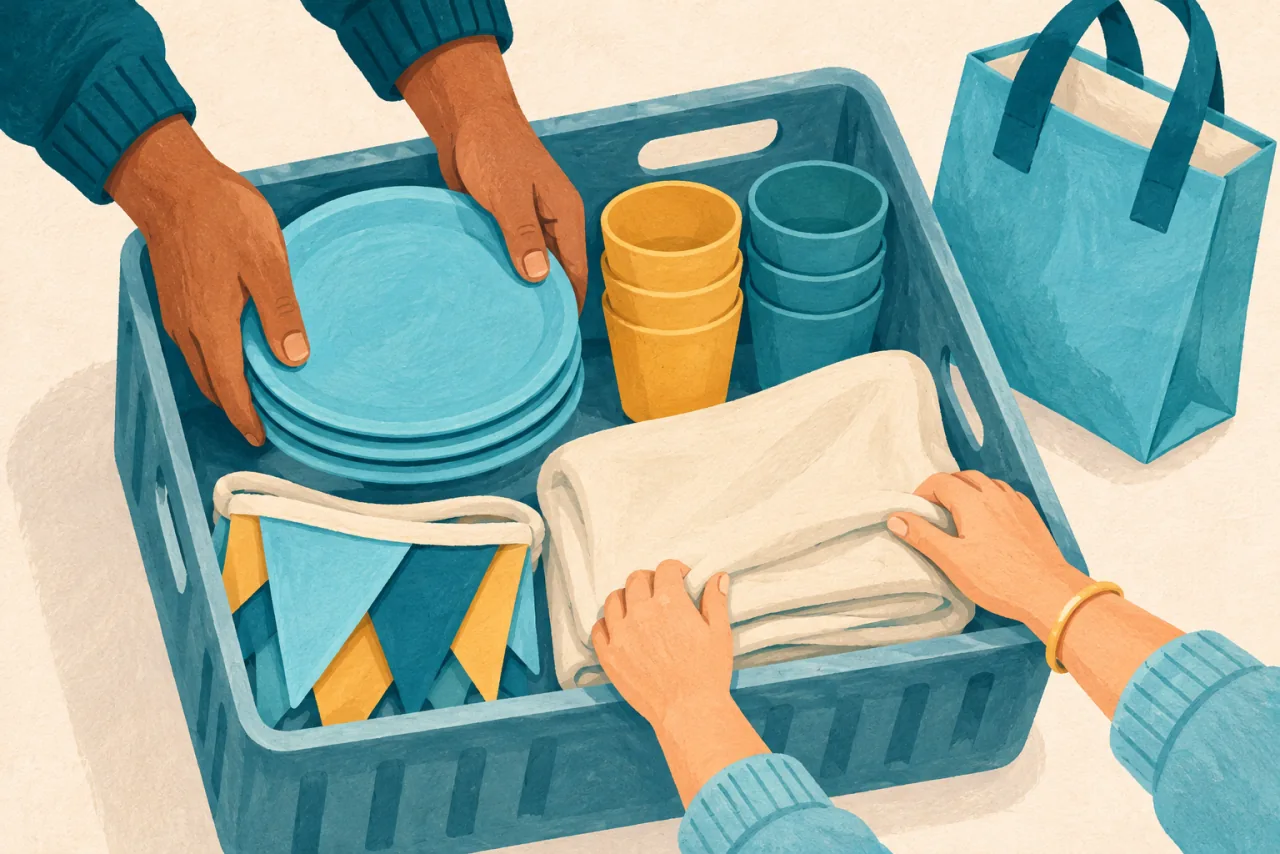
Ask friends or your local community whether someone has suitable reusable plates, cups or serving dishes. Check the number available, the condition and the arrangement for cleaning and returning them.
Match your choice to the setting and ages attending. Something practical for a seated meal at home may not suit a busy outdoor gathering. Ask the venue if you are unsure which items it permits.
Keep borrowed sets identifiable. Take a photo of what you receive and make a note of whose items they are. Plan a collection or return time while arranging the loan, rather than trying to work it out when everyone is clearing up.
If borrowing involves several separate journeys or more work than you can manage, keep the plan smaller. The useful question is what can be reused in your real circumstances.
Choose decorations that can work again
A colour theme is easier to reuse across different birthdays than a large collection printed with a particular age or name. Start with decorations already stored at home before adding anything new.
Look for suitable pre-loved decorations through people you know or community sharing. Check their condition and suitability for your venue, follow any product instructions and keep decorative items separate from things intended for children to play with.
After the party, store decorations together with a note of what is included. Photograph any bundle you want to pass on while you still have it laid out. Our guide to giving away children's things can help you arrange that next step.
Pick activities before buying activity supplies
Choose games around the space, the age range and what children enjoy. You could use existing toys, a familiar party game or a drawing activity using materials already at home.
Check what an activity really needs. A box labelled as a craft kit may contain several single-use extras that are not necessary for the part you want to do. Equally, do not assume an old item is suitable simply because it can be reused; choose materials and activities appropriate for the children attending.
If toys are coming out of storage for the party, group them into complete activities beforehand. Our toy rotation guide explains how to make existing sets easier to find and use.
Decide whether you want party bags
Party bags are a choice, not a requirement. If you want a take-home item, consider one useful thing rather than several fillers chosen because there is room in a bag.
One possible activity is a clearly explained book exchange, with families' agreement. A pre-loved book should be complete and in suitable condition, and the plan should not depend on every guest being able to bring one. The children's book swap guide gives example rules.
You could also decide that the activity itself is the take-home item. Explain any arrangements in advance so parents know what to expect. Keep food-related choices aligned with the needs and information shared by attending families and your venue.
Make gift expectations easy to understand
If you welcome second-hand gifts, say so in the invitation. Avoid language that makes another family feel they need to buy something to attend.
A simple sentence could be: "No present needed; if you would like to bring one, pre-loved books or toys are welcome." Use it only if it reflects what your family is comfortable with.
If grandparents or relatives ask for ideas, name a specific gap rather than a broad theme. It is easier to avoid duplicate toys when people know what you already have. Any shared gift plan should leave room for different budgets.
Keep gift bags and wrapping that can be used again. For paper that is no longer reusable, Recycle Now's wrapping paper guidance explains why materials and local collection rules matter. Do not assume all decorative paper belongs in household recycling.
Plan the clear-up before guests arrive
Put returnable, reusable and recyclable items in separate places during the clear-up. Keep borrowed things out of a general box of leftovers.
A short checklist can help:
- Match borrowed tableware to the photo or list you made.
- Clean and dry reusable decorations before storing.
- Keep any item promised to another family together.
- Check local collection guidance for packaging and other waste.
- Complete agreed returns so nothing stays in the hallway indefinitely.
If you would like to share suitable items afterwards, learn about YoungPlanet's free marketplace. Name the contents, show their current condition and agree collection like any other offer.
A manageable low-waste party ends with happy memories and a clear home for the things left over. Choose the few changes you can complete and let those become part of the next celebration.
Make borrowing and returning one plan
Before borrowing an item, record who agreed to lend it, what is included, when you can collect it and when it should go back. Use a private list for contact details, not a public event invitation. Decide who is responsible for cleaning and checking the borrowed item according to its instructions.
Scroll the table sideways on a small screen to see every planning column.
| Item | Agreed lender | Collect | Return and check |
|---|---|---|---|
| [Item and included parts] | [Keep contact privately] | [Agreed time] | [Agreed time and condition check] |
After the party, return borrowed things before deciding what to offer elsewhere. Only list something you own or have explicit permission to pass on. Our sharing checklist can help with the next handover.
← Back to the blog