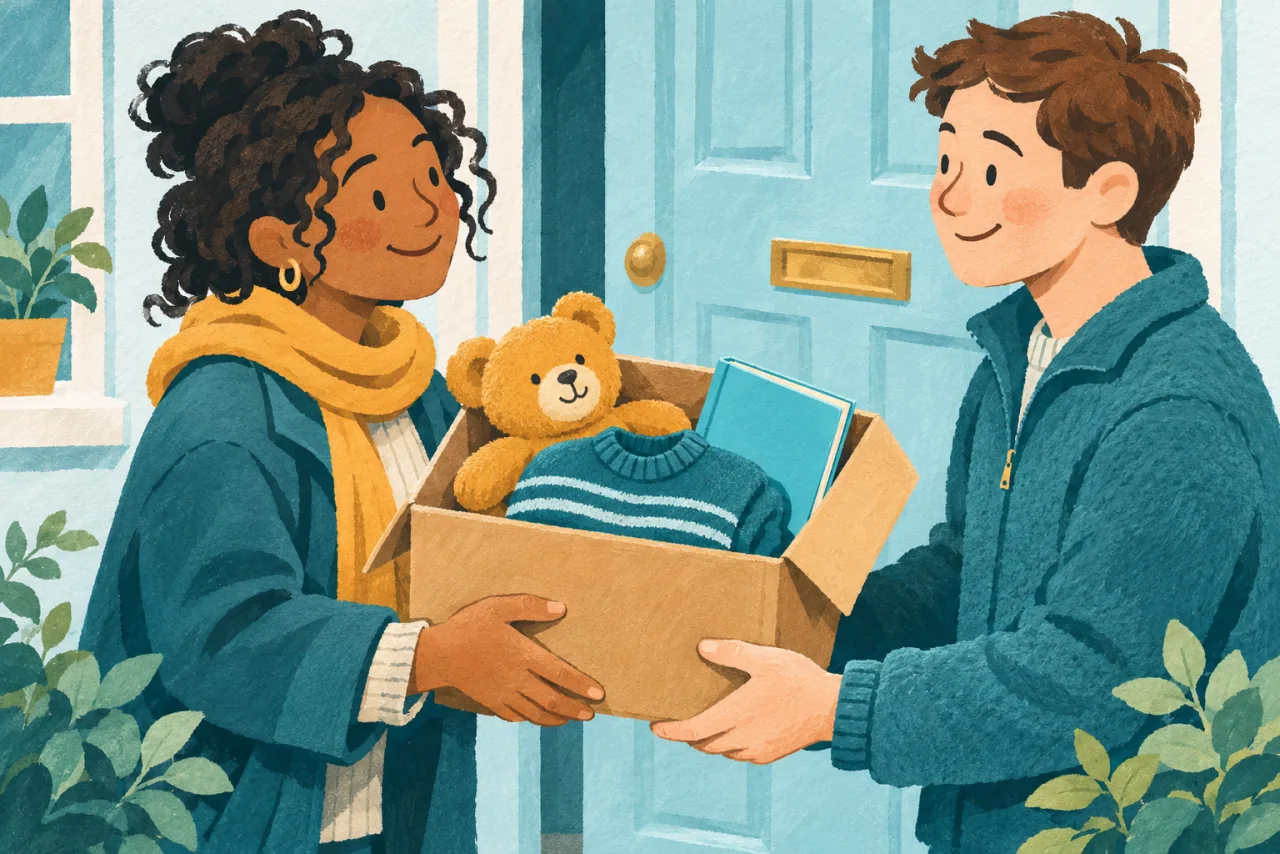

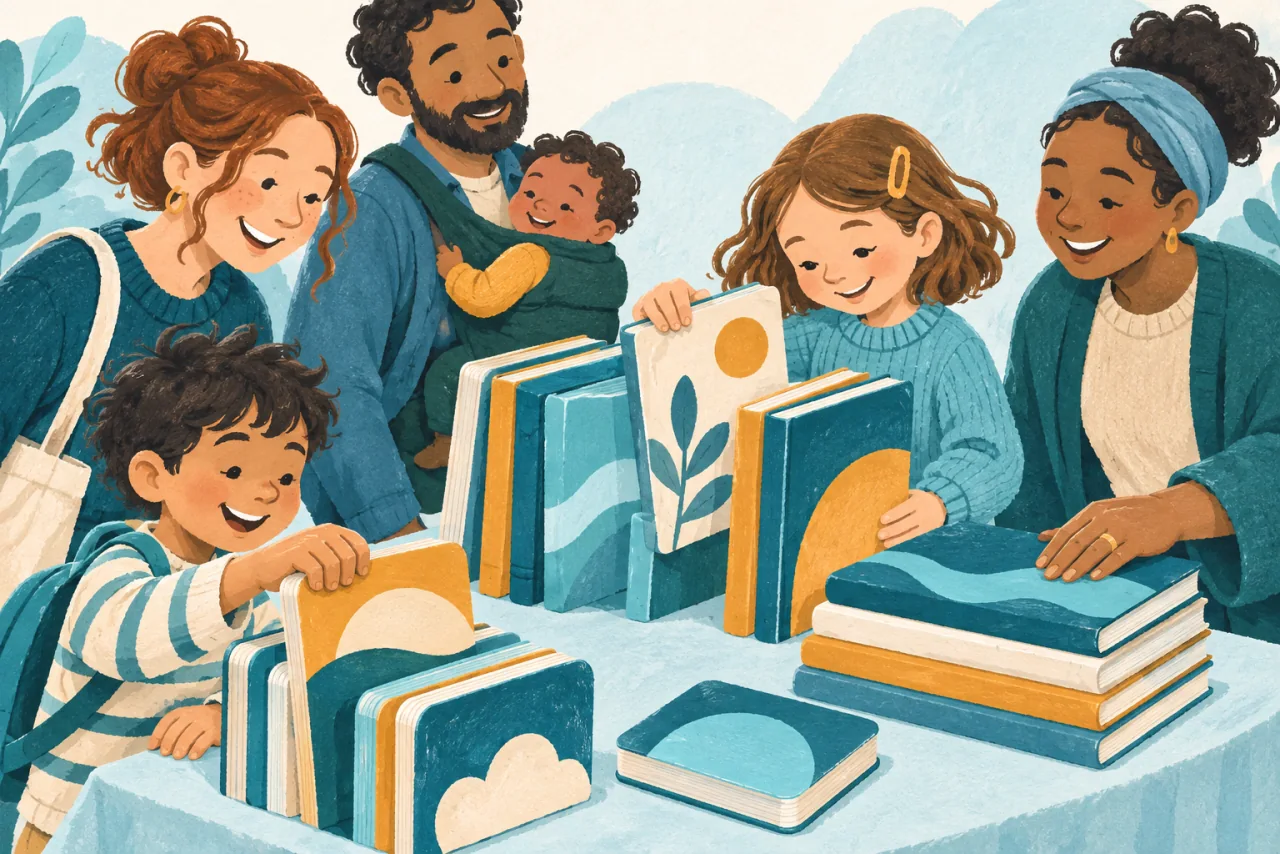
A children's book swap is a gathering where families bring books they are ready to pass on and choose other books to take home. To organise one, agree a place, set simple rules about condition and quantities, and decide what happens to books left at the end. A small swap between a few households can work without tickets or a booking system.
This guide covers a permanent exchange of books. If you want everyone to return what they borrow, agree a lending arrangement instead and make that clear from the start.
Choose a scale you can manage
Start with families you know, or ask an existing group whether a swap would suit a meeting already in the calendar. You need somewhere to display books and enough time for people to browse.
If you want to use a school, library, nursery or community venue, speak to its organiser first. Agree permission, timing, supervision and who will set up and clear away. Do not assume that an open space or a public shelf is available for a new event.
Keep your first event easy to finish. A single table at an agreed gathering may be more practical than planning a standalone afternoon before you know how many people are interested.
Decide who the books are for
Tell families the broad range you expect: board books and picture books, early readers, longer stories, or a mixture. You are helping people decide what to bring, not assigning a reading level to every child.
Consider different languages and interests. A bilingual book or an illustrated non-fiction title can belong on the table if it suits the group. Give people enough information to browse without making them explain their child's reading ability.
Keep a small area for books that do not fit the main group, or ask people to leave those at home. Clear boundaries are easier than finding yourself responsible for several boxes of unrelated adult books.
Write simple rules before sending invitations
Decide how many books each household can bring and how choosing works. You could use one book in, one book out, or a shared table where families take a small agreed number. Neither approach is compulsory; choose what fits your group.
If you want families to attend without bringing a book, say so directly. Otherwise someone may assume they cannot take part. Avoid describing an event as free and open to everyone if it has an exchange requirement or a venue charge.
Make the condition rules practical. Ask for books with complete pages and usable bindings. Normal signs of reading are different from missing pages or a book that cannot be opened properly. Explain whether writing, personalised inscriptions or damaged flaps should be noted.
Agree the leftover plan before the event. Families might take unchosen books back, or give you permission to offer them to an organisation that has agreed to accept them.
An invitation you can adapt
Here is example wording for a small, informal swap. Replace the arrangements with your own:
We're organising a children's book swap at our next group meeting. Bring up to three books your family is ready to give away permanently, with all pages present and the binding usable. Picture books and early readers are welcome.
You can choose up to three books from the shared table. You are welcome to join us even if you do not have a book to bring. Please keep borrowed and library books at home.
At the end, take any of your unchosen books back unless you have agreed a different plan with the organiser. Message us for the meeting details and any questions.
State the actual place, time and venue arrangements through your group's usual channel. Do not publish private home addresses or children's details as part of a public invitation.
Check and arrange the books when they arrive
Ask each family to check inside covers and between pages before leaving books on the table. Remove personal notes, photographs or loose paperwork. Library books and anything belonging to someone else should go back to their owner.
Group books in ways that are easy to browse, such as board books, picture books, shorter stories and longer reads. A few handwritten labels are enough. Set books where children and adults can look through them without blocking the space.
Keep sets together if they are meant to be offered as a set, and state whether a series is complete. Someone choosing one volume should not discover later that the donor expected the entire box to stay together.
Keep choosing fair and unhurried
Explain the rules at the beginning rather than expecting everyone to have read the invitation. If a lot of people arrive together, use a simple first browsing round before people choose their final books.
Give children room to say no to a title. They may want the book with a familiar character or choose something unexpected. You do not need to turn the swap into a competition over who brought the most valuable books.
If you are helping an event at an existing group, keep its normal supervision arrangements. A swap table should not quietly become an unplanned childcare activity.
Give leftover books a clear destination
Return unchosen books according to the agreement you made. Ask a charity or community organisation about its current acceptance policy before taking a box there.
For books no longer suitable to pass on, consult Recycle Now's book guidance and check local arrangements. Books are not automatically accepted with ordinary kerbside paper recycling.
You can also offer suitable books directly to another household. Our guide to giving away children's things covers clear descriptions and collection arrangements. A toy listing structure can be adapted for a book bundle by listing titles, editions and condition.
Keep the idea useful after the first swap
Ask one practical question afterwards: would families prefer another swap, a smaller exchange or simply a way to offer individual bundles? There is no need to create a permanent scheme if a one-off event did the job.
If you are refreshing the shelves at home, our toy and book rotation guide can help you choose what stays within easy reach. For books ready for their next household, explore the YoungPlanet marketplace.
A checklist and invitation you can reuse
Download the book-swap checklist before choosing the venue and rules. Agree whether families can take a book without bringing one, and how any leftovers will be handled. The organiser should make that choice explicit rather than letting people guess on arrival.
Adapt this sample invitation to your own event:
Children's book swap at [venue] on [date], [start and finish time]. Bring [your agreed number or rule] of suitable books in the condition described below. [Explain whether bringing a book is required.] Please keep borrowed or library books out of the swap. Contact [organiser's chosen public contact] with access questions. Leftover books will [agreed plan].
This is an invitation template, not a YoungPlanet event announcement. Obtain the venue's permission and use an appropriate organiser contact without publishing a child's private details.
← Back to the blog