The simplest way to deal with outgrown baby clothes is to separate what you want to keep from what another family can wear, then give every remaining item a clear next step. Bundle wearable clothes by labelled size and type. Check donation requirements before dropping anything off, and look up local textile recycling for pieces that cannot be reused.
A drawer-by-drawer approach is enough. You do not need new storage boxes or an afternoon with every outfit on the floor.
Start with the clothes that no longer fit
Choose one size range or one drawer. Put everyday clothes that still fit straight back into use, so you can see how much of the pile actually needs a decision.
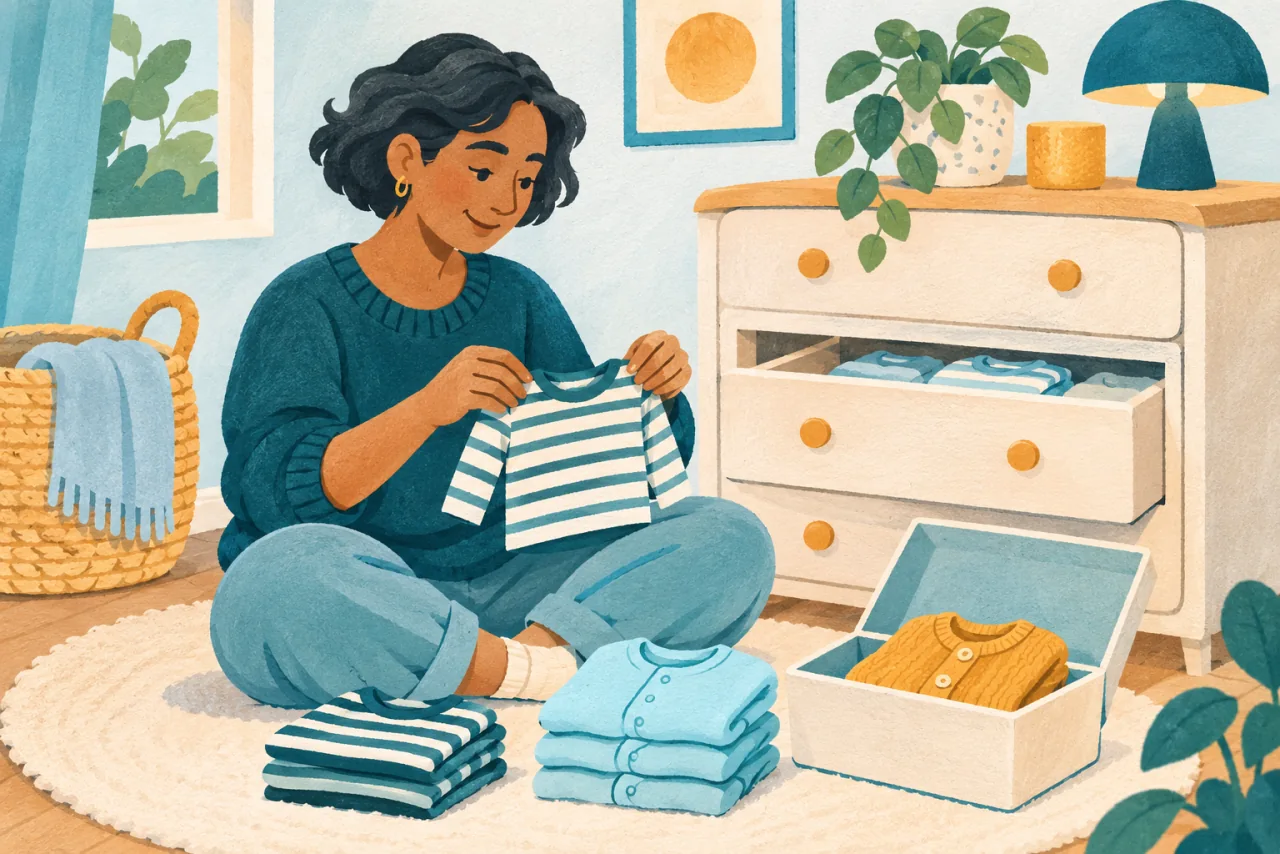
Use four groups: keep for a reason, pass on, check or repair, and find a disposal route. Keep these groups separate while you work. Otherwise a stained vest can end up in a clean donation bag simply because it was on the same chair.
Check labels rather than guessing from appearance. A garment labelled 0-3 months and one labelled 3-6 months may look similar, but the next parent needs the information printed on each item.
If you are receiving clothes instead, our guide to finding free baby clothes in the UK covers the other side of the handover.
Choose keepsakes before building bundles
Some clothes are memories first and useful garments second. Put your favourite pieces aside before deciding what to offer. You could keep one coming-home outfit, a knitted cardigan or a photograph of a favourite print.
Give keepsakes a defined home. A small box, labelled with the child's name or stage, is easier to revisit than several bags mixed into the everyday wardrobe. Check that anything stored is clean and dry.
For clothes kept for another child, write down why you are keeping them and when you expect to need them. Separate sizes and seasons. If you do not have the space or a likely use, passing them on now remains an option.
There is no obligation to keep an item because it was a gift. Equally, something meaningful does not have to be given away to make the sort-out count.
Check condition before offering clothes
Look at collars, cuffs, knees, seams and fastenings in good light. Check that labels and sizes remain readable. Pull out pieces needing attention rather than describing a mixed bundle as being in excellent condition.
A useful condition note is specific: "small mark on the left sleeve" or "one popper does not fasten". Photograph the issue so the recipient can decide whether it suits their needs.
Follow the garment's care label when washing, then let everything dry before packing it away. If you are considering a repair, complete it before describing the clothing as ready to wear. Do not improvise changes that could affect a garment's safety.
For an item with a known safety concern, follow the relevant manufacturer or recall guidance instead of including it in a bundle.
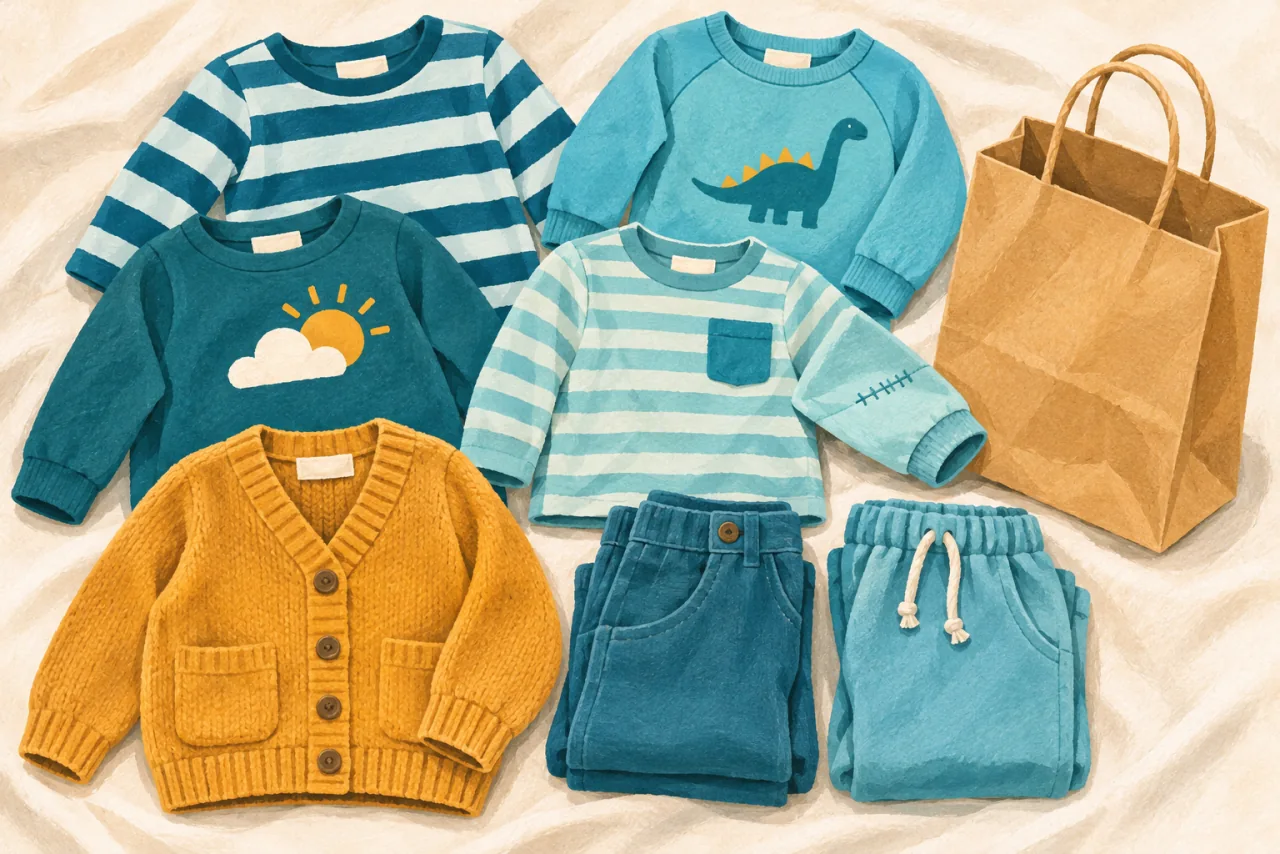
Make a bundle another parent can understand
Group by a clear shared feature: labelled size, clothing type or season. A small bundle of sleepsuits is easier to assess than an unexplained sack covering several years.
List the actual contents. For example:
Example description: Five long-sleeved cotton tops labelled 6-9 months. All five tops are pictured. One has a small faded mark on the cuff, shown in the last photo. Offered together as a bundle.
Only use wording that is true for your own items. If sizes vary, list them separately. If a brand seems to fit differently, keep the labelled size and add measurements rather than replacing it with a guess.
Before packing, take an overhead photo of the complete bundle. Use a clean bag or box you already have and label the outside with the size range. Keep the listing and bundle matched if you have more than one collection planned.
Where to donate or give away baby clothes
You can offer suitable clothing directly to another family through YoungPlanet, ask friends who need the next size, or check with a charity or baby bank.
The Baby Bank Alliance directory helps you find organisations nearby. Check the individual organisation's current donation list, opening times and preferred packing arrangements. Some need particular sizes and cannot store everything offered.
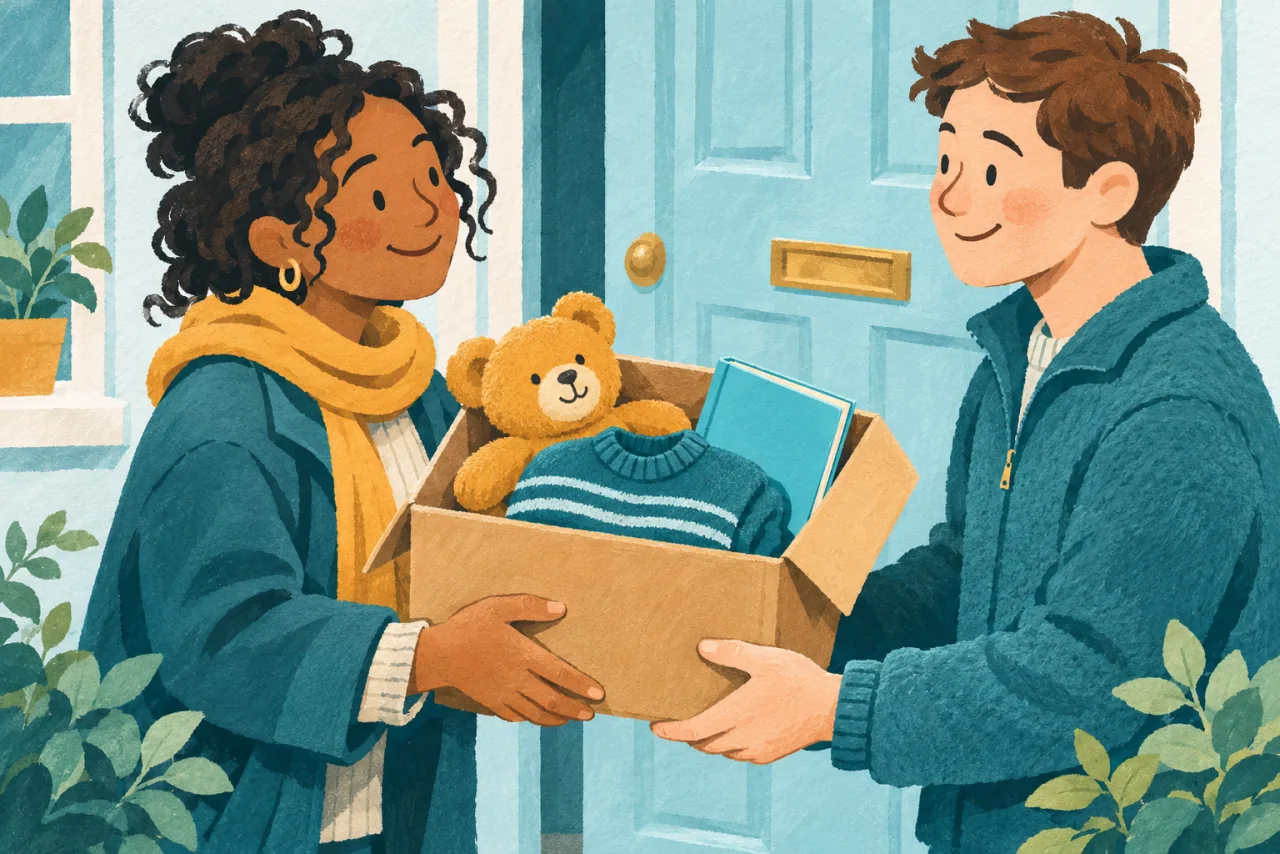
When giving directly, agree whether the whole bundle is being collected or only specific pieces. This avoids someone arriving for one coat when you expected them to take a box.
Our guide to giving away children's things explains how to choose a route and organise the handover. The YoungPlanet FAQs cover common questions about the service.
What about stained, damaged or worn-out clothing?
Do not hide unusable pieces inside a wearable bundle. If a stain or repair changes the item's usefulness, explain it before anyone agrees to collect.
Recycle Now's clothing and textiles guidance distinguishes reusable clothing from items that may need textile recycling. Check the rules of the specific collection point, including which conditions and materials it accepts.
Avoid leaving bags beside a full bank or outside a closed shop. Keep them dry while you arrange the correct destination. An item being unsuitable for a wearable donation does not tell you which local collection will accept it.
Keep the next sort-out small
Place one labelled bag in the wardrobe for newly outgrown pieces. When you notice sleeves getting short, add the garment after it has been washed and dried. Keep a separate note of the next size your child actually needs.
Review the bag before it becomes a stack of forgotten bags. Finish one bundle, photograph it and arrange its next home. You can learn about YoungPlanet's free marketplace when you are ready to offer it.
The useful result is a wardrobe that works today and a clearly described bundle ready for another family.
Turn a vague offer into a useful description
This is an illustrative example, not a live offer. Instead of "bag of baby clothes, good condition", use details you can verify: "Seven tops and three sleepsuits, labelled 3-6 months. The items shown are included. Two tops have small marks pictured close up. One shopping bag, collection by arrangement."
Replace every number, size and condition detail with facts about your own bundle. Photograph the whole bundle and relevant labels. Keep exact collection details private.
Download a clothing-bundle description template. To see what a recipient can inspect before making contact, browse current clothing offers.
← Back to the blog