A useful second-hand toy listing names the toy, shows what is included, describes its actual condition and explains the collection arrangement. Clear information helps another family decide whether the toy is right for them. It also gives you fewer unanswered questions to deal with before a handover.
The aim is an accurate offer. You do not need polished advertising copy, a perfect playroom or a promise that someone will collect it immediately.
Gather the toy and everything that goes with it
Bring accessories, instructions and packaging together before taking photos. Check whether the contents match the box or manufacturer's list, if you have one.
Be precise about what you have checked. "All 24 puzzle pieces counted" means something different from "looks complete". If you cannot verify a set, say which parts you can identify and avoid claiming that nothing is missing.
Read any available labels for the model and manufacturer's age guidance. Do not invent a recommended age from your own child's experience. A toy being enjoyed by one child does not establish its suitability for another.
Before offering it, check the GOV.UK product safety alerts and recalls and follow any applicable instructions. A good photograph or a detailed description does not resolve a product safety concern.
Write a title people can recognise
Use the everyday name of the item first, then a useful identifying detail. "Wooden train track bundle with bridge" is clearer than "Amazing toy, must go".
For branded toys, include the brand or model only if you can identify it accurately. For puzzles, use the image or theme and the piece count if checked. For board games, state the title and edition where relevant.
Avoid filling the title with unrelated brands, age ranges or repeated keywords. Someone searching for a particular set should be able to tell whether your listing is actually about that set.
If you have a group of unrelated toys, consider whether they would make more sense as separate offers. A bundle works when the recipient can understand its contents and has a reason to want them together.
Take photographs that answer questions
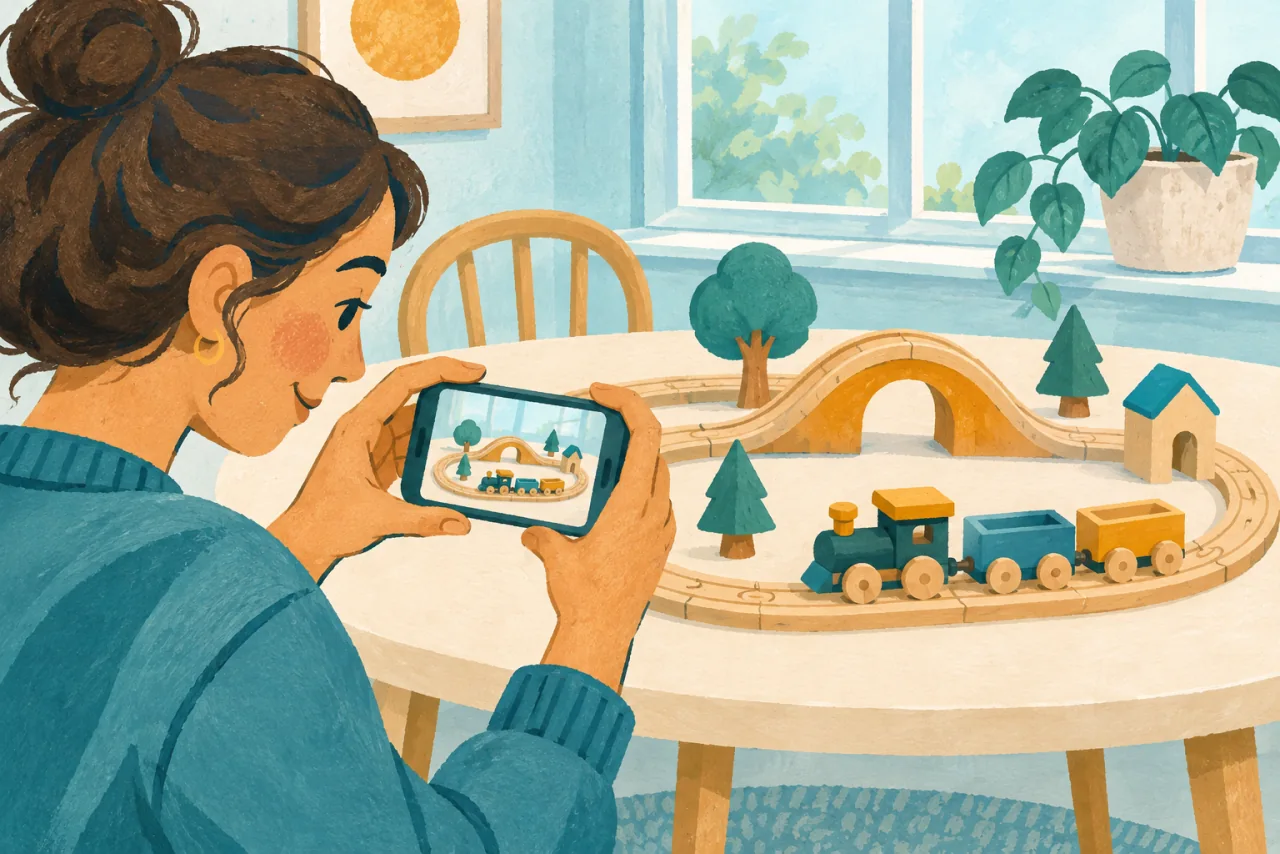
Use daylight and a plain space where the toy is easy to see. Keep personal paperwork, visible addresses and children's identifying details out of the background.
A practical photo set includes:
- The whole toy or complete bundle.
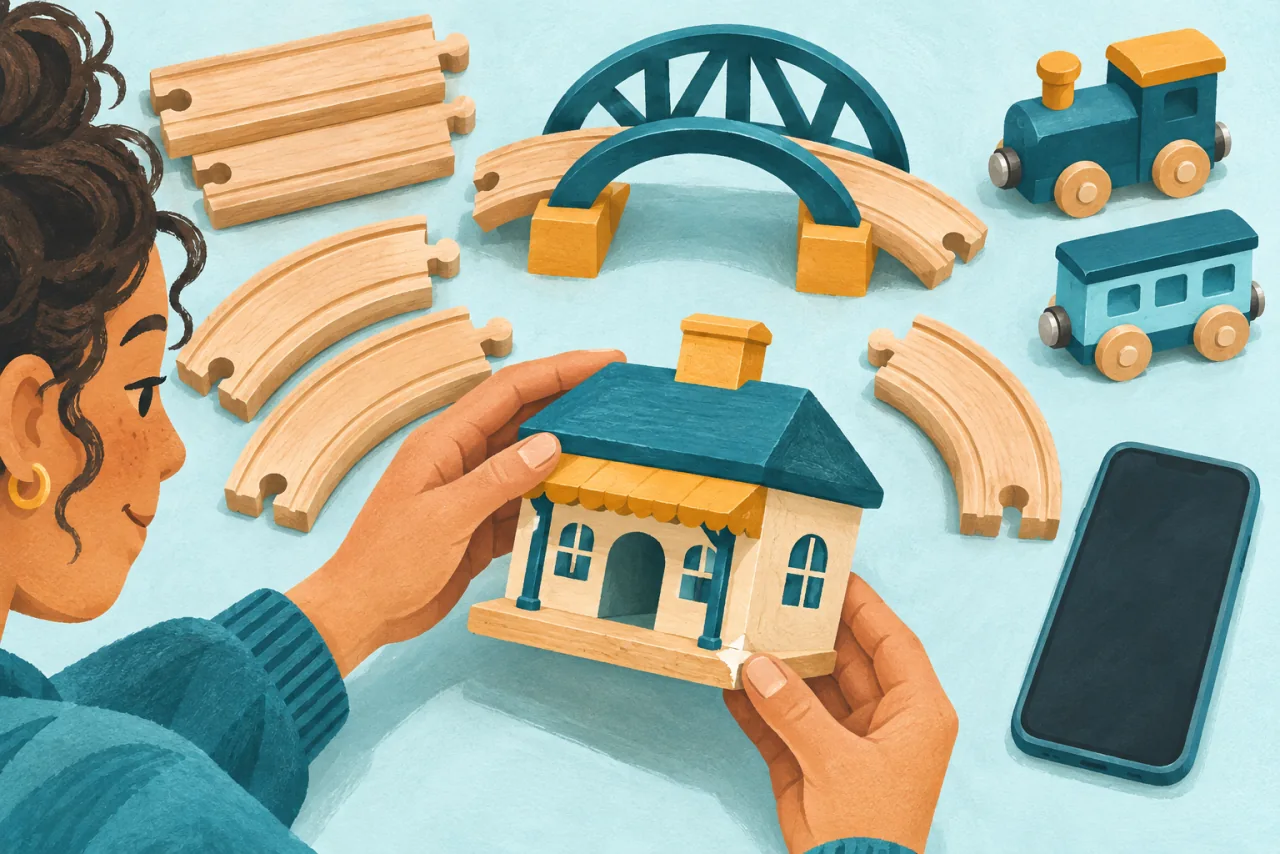
- Accessories laid out beside it.
- A readable model or size label, where relevant.
- Close-ups of wear, damage or missing parts.
- A scale reference or measurements for a bulky item.
Use current photos of the item you are offering. A catalogue image cannot show its condition, and a photo from years ago may no longer represent it accurately.
For a large set, a few clear grouped photos can be more useful than one crowded picture. Keep the description and photos consistent if you remove an accessory or change the bundle later.
Describe condition with observable details
Replace broad phrases with things the recipient can check. "Light scratches on the roof, shown in photo three" is more useful than "good for its age".
Say whether a function has been checked and what happened. Do not describe a battery toy as fully working if you have not tried the functions you are claiming. Follow manufacturer instructions when handling batteries or cleaning electrical toys.
Distinguish cosmetic wear from something affecting use. If a known defect makes an item unsuitable, address that before listing it rather than assuming a warning makes the offer acceptable.
Mention whether instructions or the original box are included, but do not imply they are present because they appear in an old photo. If an instruction manual is available on the manufacturer's website, confirm it matches the actual model before referring someone to it.
A worked example you can adapt
The following is an illustrative listing, not an offer for a real item:
Wooden train track bundle with bridge
Wooden track bundle shown in the photos: 18 track sections, one bridge, two trains and one station building. Offered together. The pieces pictured are the pieces included; I cannot confirm whether this matches the original set.
There are light surface marks on several track sections and a chip in the station paint, shown close up. Manufacturer labels and any available age guidance are pictured. No original box or instructions included.
Free to another family. Local collection by arrangement. Please message to agree a time before travelling.
Use the structure, then replace every detail with information about your own toy. Check that your listing remains accurate after packing it.
Make collection details useful without making them public
A general area helps someone judge whether collection is practical. Share precise details privately once you have agreed an arrangement you are comfortable with, following the platform's guidance.
Explain whether the toy is bulky, comes apart for transport or needs a large bag. Do not promise disassembly unless you can do it according to the instructions and keep the parts together.
Agree which items are being collected and update the other family if plans change. Once the exchange is complete, update the listing's status using the service's available controls.
Check the listing before it goes live
Read it alongside the pictures. Can another parent identify the toy, see its contents, understand its condition and decide whether collection is manageable? Remove any claim you cannot support.
If the clear-out is still at an earlier stage, start with our pre-Christmas toy sorting plan. If you are keeping the toy but want a more manageable play space, try toy rotation at home.
For the wider handover process, see how to give away children's things. When your offer is ready, learn about sharing through YoungPlanet and check the app's current listing options.
Use the actual listing flow
In the web app, choose List an item and sign in if asked. Add your own current photos, a clear name and description, the relevant category and the collection options that genuinely apply. Complete the required fields shown in your version of the app and read the offer back before publishing.
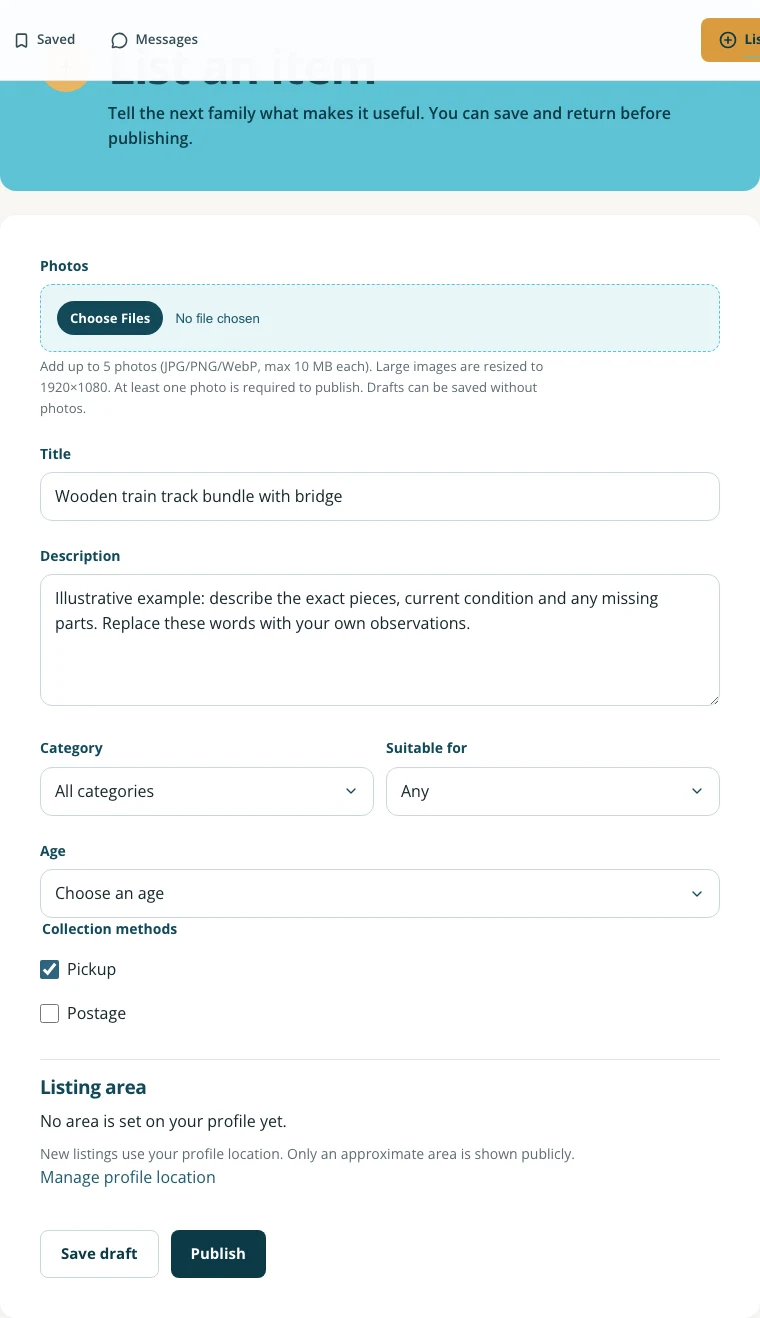
Keep the title specific and the description observable. "Works" should refer to a function you checked, and "complete" should mean you actually checked the pieces. If you cannot support a claim, leave it out.
Open the listing form, browse current toys and games, or read our sharing safety checklist. A current offer can change at any time; the worked example above is not one of those offers.
← Back to the blog